

Jason Bourne is the owner of a Fremont-based water restoration business, dedicated to helping homeowners and businesses recover quickly from water damage. With a focus on reliable service, fast response times, and quality restoration work, Jason is committed to helping clients restore their properties and get back to normal.
Roughly 70% of homes contain mold somewhere inside them, according to research published by the American College of Occupational and Environmental Medicine — yet most homeowners only act once symptoms appear or damage becomes visible. Understanding the difference between mold inspection and mold remediation is the first step toward protecting your property and your family’s health. These two services are closely related but serve entirely different purposes, and confusing them can lead to wasted money, incomplete treatment, or recurring mold problems.
Quick Answer
Mold inspection is the diagnostic phase — a trained professional assesses your property to identify whether mold is present, where it is located, and what type it is. Mold remediation is the treatment phase — the physical removal, containment, and cleanup of mold growth, followed by steps to prevent it from returning. You typically need an inspection before remediation can be planned effectively.
Key Takeaways
- Mold inspection identifies the presence, location, type, and extent of mold growth through visual assessment, moisture mapping, and sampling.
- Mold remediation is the hands-on process of containing, removing, and treating mold-affected materials.
- Inspection should always come before remediation — attempting to remove mold without knowing its full scope can spread spores and worsen the problem.
- Not every visible mold spot requires full remediation; the inspection report determines the appropriate response.
- Moisture control is the root issue — remediation without addressing the water source will result in mold returning.
- Mold testing (air and surface sampling) may be performed during inspection and again after remediation to confirm clearance.
- Both services require trained professionals with proper equipment and protective gear.
- Fremont Restoration Experts provides mold inspection, mold testing, mold remediation, and written reports for residential and commercial properties across Fremont, CA and surrounding cities.
What Is Mold Inspection, and What Does It Actually Involve?
Mold inspection is a structured assessment of a property to determine whether mold is present, where it exists, how extensive it is, and what conditions are allowing it to grow. A qualified inspector does far more than glance at a wall — the process involves moisture meter readings, thermal imaging in some cases, and collection of air or surface samples sent to a certified laboratory.
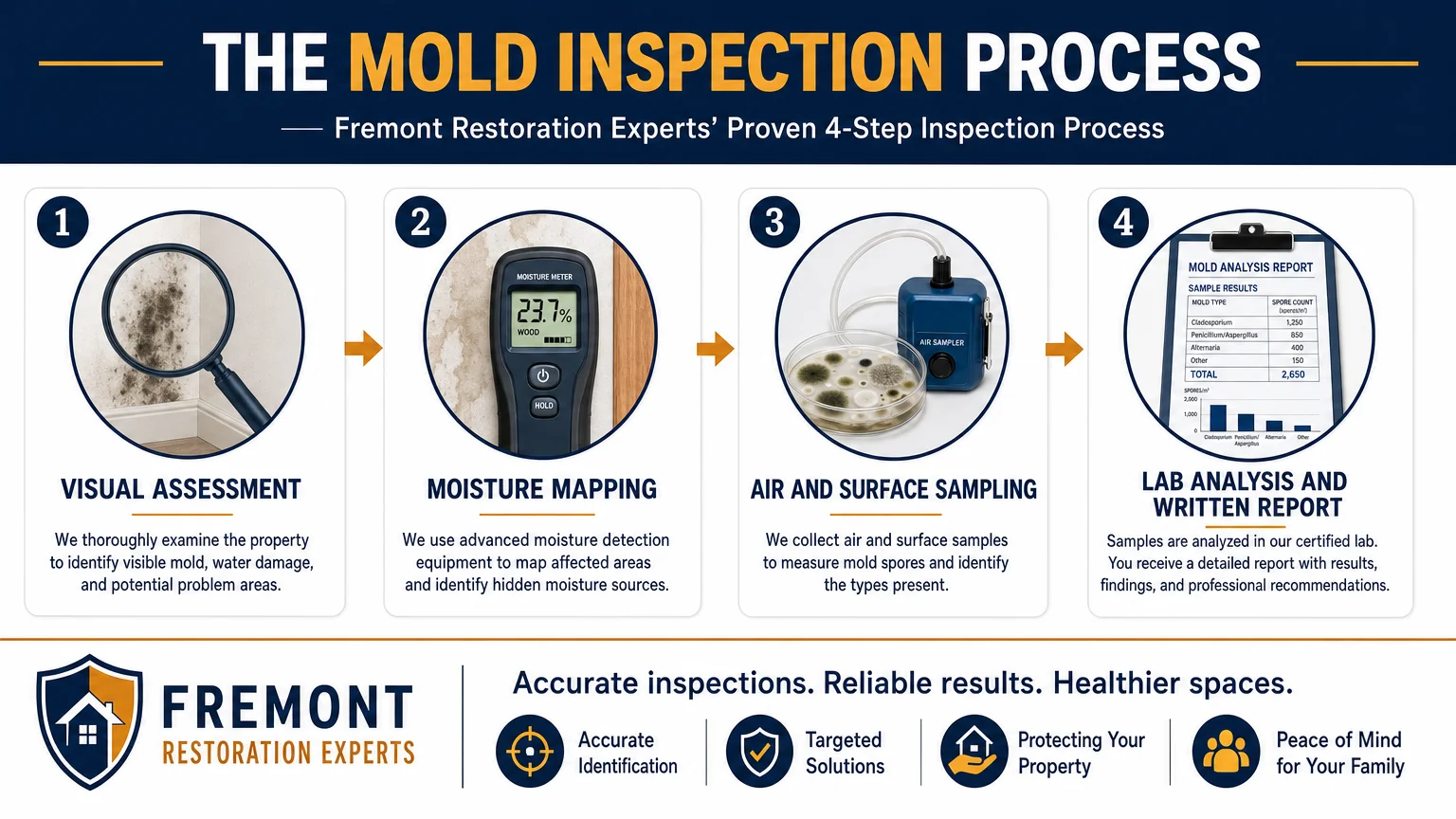
A thorough mold inspection typically follows these stages:
- Visual Assessment — The inspector examines all accessible areas, including behind appliances, under sinks, inside HVAC systems, and along exterior walls, looking for visible mold growth, water staining, and structural damage.
- Moisture Mapping — Using calibrated moisture meters, the inspector identifies elevated moisture levels in walls, floors, and ceilings — even where no mold is yet visible.
- Air and Surface Sampling — Spore trap cassettes or swab samples are collected and sent to an independent laboratory for analysis. This confirms the species present and the concentration of spores in the indoor air.
- Written Report — The inspector delivers a detailed report outlining findings, affected areas, mold species identified, and recommended next steps.
For homeowners in the East Bay area, mold inspection in San Lorenzo and mold inspection in Newark follow this same professional protocol, ensuring that nothing is missed before any remediation work begins.
What Is Mold Remediation, and How Is It Different from Mold Removal?
Mold remediation is the comprehensive process of safely containing, removing, and treating mold-affected materials in a structure. The term “mold removal” is often used casually, but it can be misleading — mold spores are naturally present in all environments and cannot be entirely eliminated. The goal of remediation is to return mold levels to a normal, non-harmful baseline and to address the conditions that allowed growth in the first place.
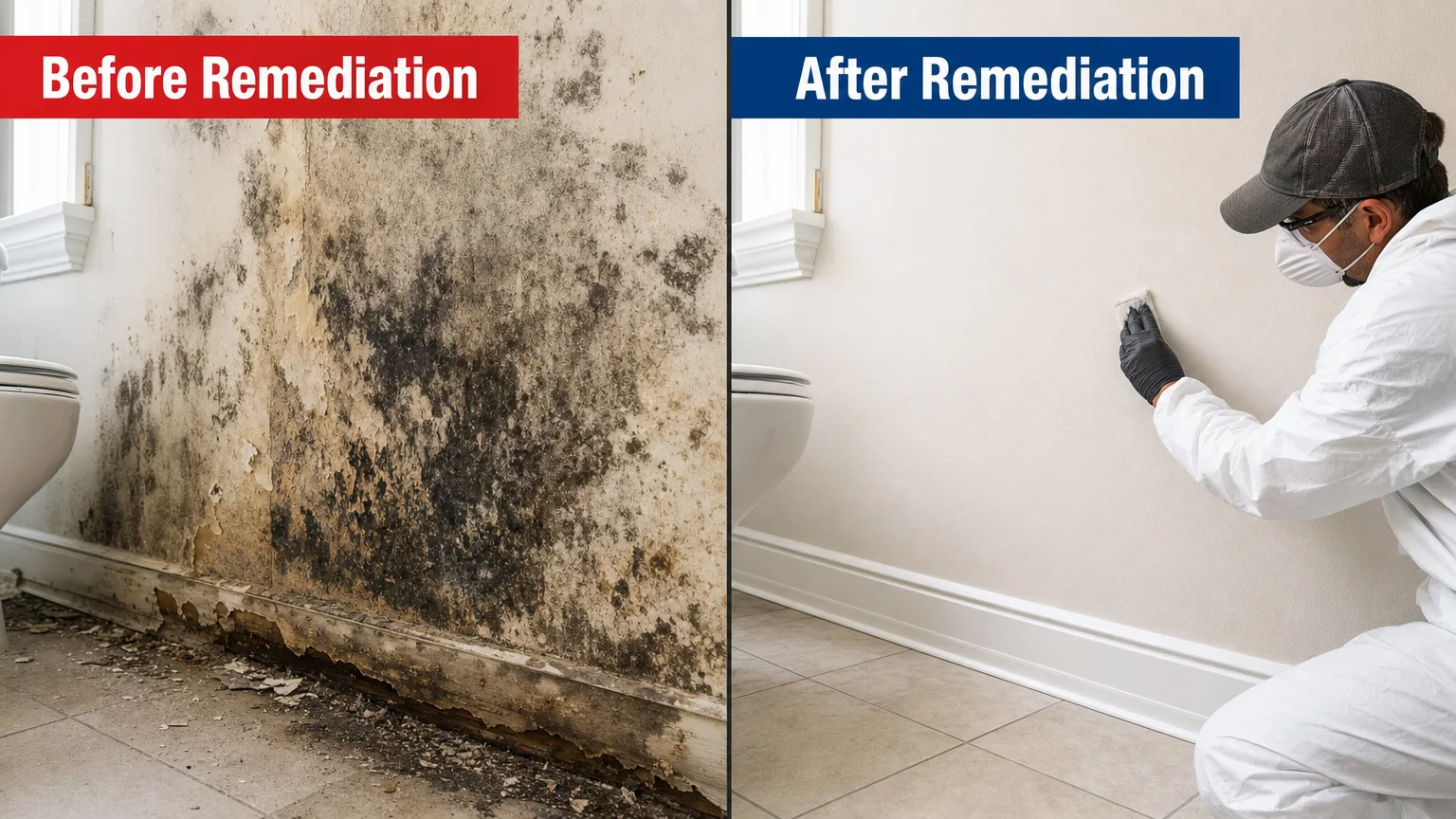
A professional mold remediation project generally includes:
- Containment setup — Plastic sheeting and negative air pressure machines isolate the work area to prevent spores from spreading to unaffected parts of the building.
- Personal protective equipment (PPE) — Technicians wear respirators, Tyvek suits, and gloves throughout the process.
- Physical removal — Porous materials such as drywall, insulation, and carpet that are heavily contaminated are removed and properly disposed of.
- HEPA vacuuming and antimicrobial treatment — Hard surfaces are cleaned with HEPA vacuums and treated with EPA-registered antimicrobial agents.
- Structural drying — Any remaining moisture is eliminated using industrial dehumidifiers and air movers. This step is critical; without it, mold will return. Structural drying in Castro Valley is one example of this service offered by Fremont Restoration Experts across the region.
- Post-remediation verification — A clearance test (air sampling) confirms that mold levels have returned to acceptable levels before the area is rebuilt.
Fremont Restoration Experts also handles mold remediation in Milpitas and surrounding communities, providing the full scope of services from initial assessment through final clearance.
Mold Inspection vs. Mold Remediation: A Side-by-Side Comparison
| Feature | Mold Inspection | Mold Remediation |
|---|---|---|
| Primary Purpose | Diagnose and document mold | Remove and treat mold |
| Who Performs It | Certified mold inspector | Certified remediation contractor |
| Key Tools | Moisture meters, air samplers, lab analysis | Containment barriers, HEPA vacuums, antimicrobials, drying equipment |
| Output | Written inspection report | Cleaned, treated, and dried structure |
| When It Happens | Before remediation (and after, for clearance) | After inspection confirms scope |
| Typical Triggers | Musty odors, water damage, real estate transaction, health concerns | Confirmed mold growth per inspection findings |
When Do You Need an Inspection vs. Remediation — or Both?
The sequencing matters. Inspection always comes first when the presence or extent of mold is uncertain. If you can see a small patch of mold on a tile grout line, you may not need a full inspection — but if you smell mold without seeing it, or if you have experienced water damage, a professional inspection is the appropriate starting point.
You likely need a mold inspection if:
- You notice a persistent musty odor but cannot locate the source
- Your home has experienced water damage, flooding, or a slow plumbing leak
- You are buying or selling a property
- Occupants are experiencing unexplained respiratory symptoms
- You want to confirm that a previous remediation was successful
You likely need mold remediation if:
- An inspection has confirmed mold growth beyond surface-level spots
- Mold covers more than 10 square feet (the EPA threshold for professional intervention)
- Mold is inside HVAC systems, wall cavities, or under flooring
- Previous DIY cleaning attempts have not resolved the problem
Water damage and mold are closely linked. Properties that have suffered flooding or pipe failures — situations where water damage restoration in Milpitas or water damage restoration in San Lorenzo may already be underway — should also be evaluated for mold within 24 to 48 hours of the water event, since mold can begin developing in that window under the right conditions.
Does Mold Remediation Include Testing?
Mold testing and mold remediation are separate services, though they are often performed by the same company as part of a complete project. Testing refers specifically to the laboratory analysis of air or surface samples. It is typically performed twice: once during the initial inspection to establish a baseline and identify species, and once after remediation is complete as a clearance test to verify the work was successful.
Fremont Restoration Experts provides mold testing and written reports as part of its service offerings, giving homeowners documented evidence of both the problem and its resolution — documentation that can be valuable for insurance claims or real estate disclosures.
What Happens If You Skip the Inspection and Go Straight to Remediation?
Skipping the inspection phase is a common mistake that often leads to incomplete results. Without a proper assessment, a remediation crew may clean visible mold while missing hidden colonies inside wall cavities, under subfloors, or within ductwork. The mold returns within weeks, the homeowner pays twice, and the underlying moisture problem may never be addressed.
A professional inspection also protects homeowners from unnecessary work. In some cases, what appears to be extensive mold turns out to be a small, isolated area that can be addressed with targeted treatment rather than a full remediation project. The inspection report sets the scope — and an accurate scope protects everyone.
Take the Right First Step for Your Home
Understanding the difference between mold inspection and mold remediation helps homeowners make informed decisions rather than reactive ones. Inspection establishes the facts; remediation addresses them. Attempting one without the other — or skipping both until symptoms become severe — typically results in greater damage and higher costs.
Fremont Restoration Experts provides professional mold inspection, mold testing, mold remediation, and written reports for residential and commercial properties throughout Fremont, CA and the surrounding East Bay area. The team is available around the clock for emergency situations and is committed to quality, transparency, and complete customer satisfaction.
Contact Fremont Restoration Experts today to schedule a mold inspection or to discuss your remediation needs — and get your property back to a safe, healthy condition.
Frequently Asked Questions
How long does a mold inspection take?
A standard residential mold inspection typically takes between one and three hours, depending on the size of the property and the number of areas requiring sampling. Laboratory results from air or surface samples generally take two to five business days to return.
Can I do my own mold inspection?
A visual check is something any homeowner can perform, but a professional inspection goes significantly further — moisture mapping, air sampling, and lab analysis require calibrated equipment and trained interpretation. DIY inspections frequently miss hidden mold growth behind walls or under flooring.
Is mold remediation covered by homeowners insurance?
Coverage depends on the cause of the mold. Mold resulting from a sudden, covered water event (such as a burst pipe) is often covered. Mold caused by long-term neglect or gradual leaks is typically excluded. Reviewing your specific policy and documenting the damage with a professional inspection report is the best approach when filing a claim.
How do I know if mold remediation was successful?
A post-remediation clearance test — air sampling analyzed by a certified laboratory — is the standard method for verifying that mold levels have returned to acceptable baseline concentrations. Fremont Restoration Experts provides this verification as part of the remediation process.
How quickly can mold grow after water damage?
Mold can begin to develop within 24 to 48 hours of a water intrusion event under warm, humid conditions. This is why prompt water extraction and structural drying are critical after any flooding or leak.
What is the difference between mold testing and mold inspection?
Mold inspection is the broader assessment process that includes visual examination, moisture mapping, and a written report. Mold testing specifically refers to the collection and laboratory analysis of air or surface samples. Testing is one component of a complete inspection.
Do you serve areas outside of Fremont?
Yes. Fremont Restoration Experts serves Fremont and the surrounding East Bay communities, including Castro Valley, Milpitas, Newark, San Lorenzo, and Union City. The team is available 24/7 for emergency situations.
Should I vacate my home during mold remediation?
For small, contained remediation projects, vacating may not be necessary. For larger projects involving significant mold growth or HVAC contamination, temporary relocation is often recommended — particularly for household members with respiratory conditions, allergies, or compromised immune systems. Your remediation contractor should advise you based on the specific scope of work.
Jason Bourne is the owner of a Fremont-based water restoration business, dedicated to helping homeowners and businesses recover quickly from water damage. With a focus on reliable service, fast response times, and quality restoration work, Jason is committed to helping clients restore their properties and get back to normal.